Key Facts
Bangkok in Winter: A City Built for Slow Movement and Street-Level Surprises
Bangkok rewards the traveler who stops moving long enough to notice. The city sprawls across low plains where the Chao Phraya River threads through neighborhoods that feel less like tourist zones and more like places where people actually live—where a sois (side street) might yield a family-run noodle stall that has operated in the same spot for thirty years, or a Buddhist shrine tucked between a motorbike repair shop and a laundry. Winter, from November through February, is when you can actually stand still without the heat driving you indoors. The temperature dips to the low 70s Fahrenheit (around 23–26°C), humidity retreats, and the city becomes navigable on foot for hours at a time. This is the season to linger in one neighborhood for days, to cycle through the canals northwest of central Bangkok, to arrive at a market before dawn and watch the city feed itself.
What Moves You Through Bangkok: Geography and the Rhythm of Districts
Bangkok does not announce itself as a planned city. Instead, it reveals itself in layers as you move through it. The BTS Skytrain (elevated train) and MRT subway (underground) carry you across districts quickly, but the texture of the city lives at ground level—in the narrow sois and along the canals that criss-cross the riverbanks. The Grand Palace and Temple of the Emerald Buddha anchor the old royal district on the east bank of the Chao Phraya, a cluster founded in 1782. Southeast of there, Chinatown (Yaowarat) sprawls for several kilometers, dense and loud and essential—not for tourists, but because this is where Bangkok's wholesale markets, gold shops, and night-food culture actually operate. Silom, a few kilometers south, is where you find sex work alongside office towers, old shophouses next to luxury hotels, the rhythm of the city's contradictions all in one neighborhood.
North of the Chao Phraya, Thonburi sits on the west bank—older, less touristed, reachable by ferry or crossing the bridges from central Bangkok. Ari, several kilometers north on the BTS line, is where Bangkok residents actually live and eat. Sukhumvit, running north-south on the east side, is a long spine of embassies, shopping malls, and residential towers; it moves fast, moves commerce, and rarely stops. None of these feel like the same city, yet they are all connected by a grid of water and rail.
The river is Bangkok's oldest highway. Long-tail boat taxis run scheduled routes for 15–20 THB per journey, moving between the Grand Palace, the old markets, and residential neighborhoods upstream. A three-hour exploratory boat ride north, beyond the tourist ferries, costs around 400–600 THB for a private boat and shows you water neighborhoods where families live in wooden houses built on stilts and where the city's fruit and fish still move by boat as they have for generations.
How to Eat Like You Live There: Markets, Sois, and Timing
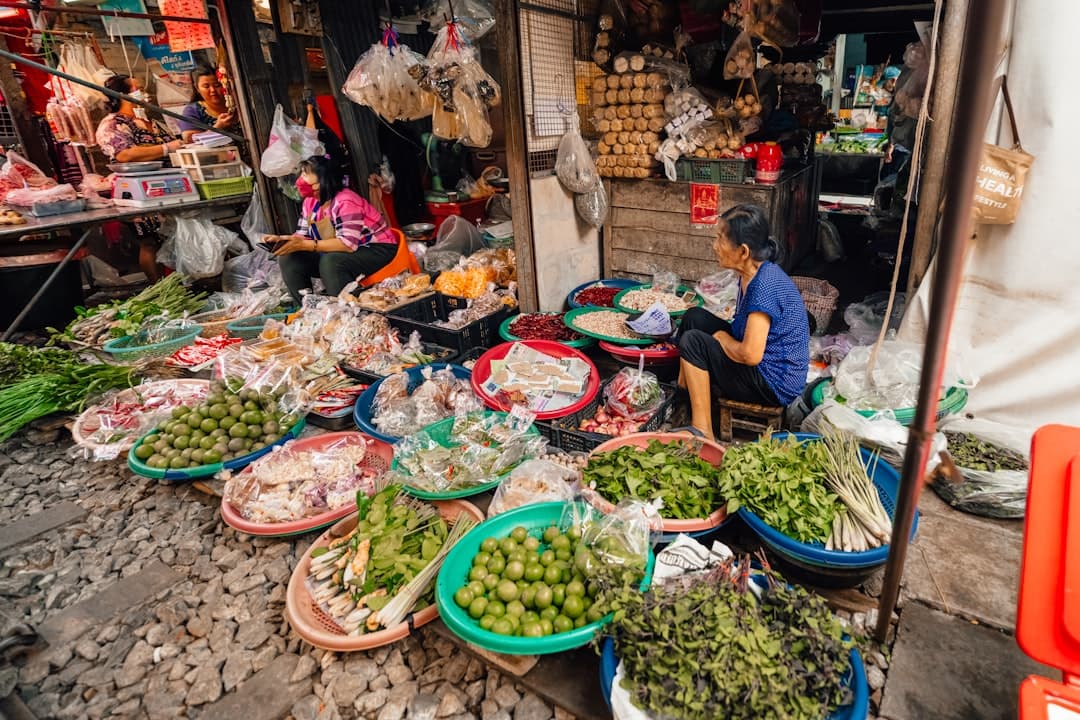
Eating in Bangkok means learning that the best meals happen outside dining rooms. Chatuchak Weekend Market, the sprawling weekend market north of central Bangkok on the BTS line, opens Saturday and Sunday mornings from around 9:00 and runs until early evening. It holds thousands of stalls across dozens of sections—produce, prepared food, clothing, antiques, fish. Arrive by 10:30 to beat the crush and eat from the prepared-food section where vendors have been working since dawn: boat noodles (a rich, dark broth with pork or beef, originally from a town north of Bangkok), mango sticky rice made fresh that morning, satay skewers, fish cakes. A full meal costs 60–150 THB per dish.
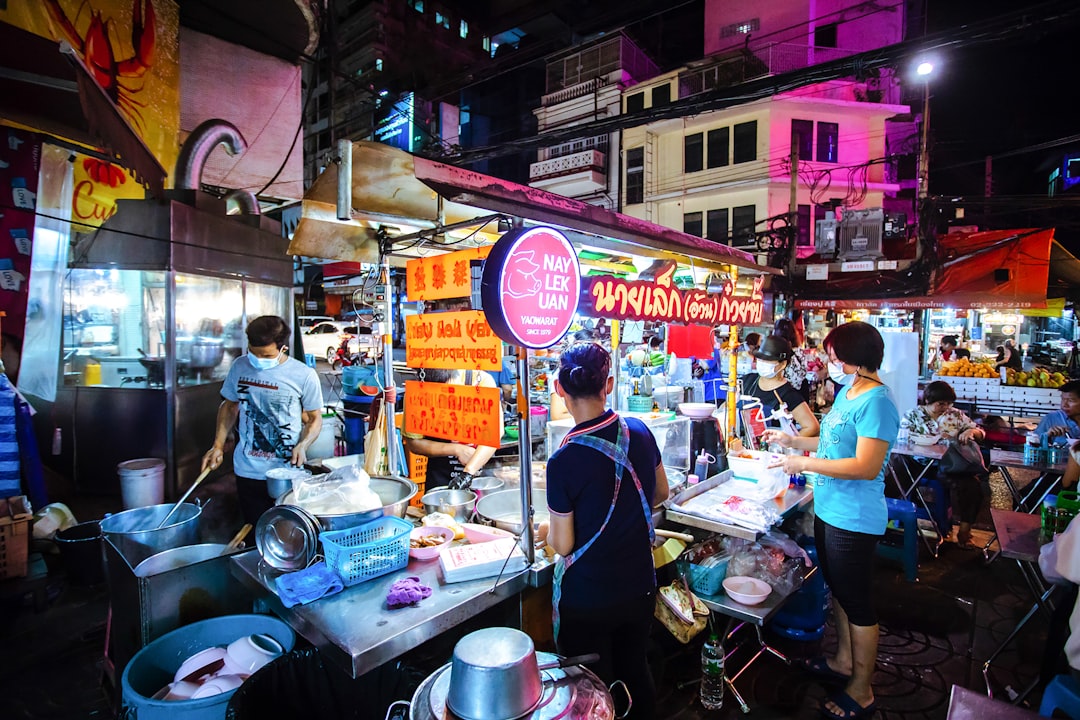
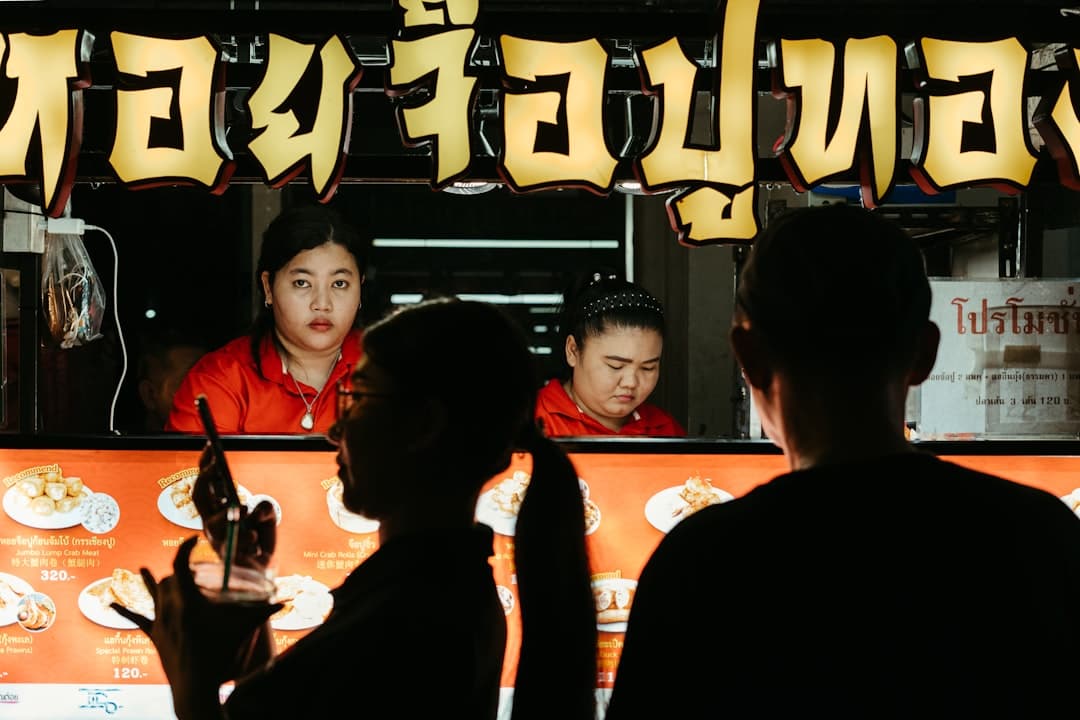
Yaowarat in Chinatown transforms after sunset. The street stays open during the day for gold shops and dry goods, but from around 17:00 onward, tables and stools appear in the street and the night-food vendors take over. Arrive around 18:00 to find space. The row along Yaowarat Road itself is crowded and touristed; the parallel sois running east and west offer the same food with more breathing room. Crab omelet, boat noodles, roasted duck, shrimp rolls—most dishes run 40–80 THB. Walk slowly. Order from where you see locals eating.
Or-Tor-Kor Market, on the BTS line in the northern Chatuchak district, opens daily and supplies Bangkok's high-end restaurants and wealthy residents. It is smaller, quieter, and cleaner than Chatuchak, and it closes by 18:00. The prepared food section here is more subdued—fewer vendors, higher prices (80–150 THB per dish), but the ingredients are pristine and the crowds thinner. Winter mornings here, around 10:00, feel unhurried. You can actually eat while you shop, without shoulder-checking strangers.
Off the Pavement: Cycling and Canal Exploration
Bangkok's reputation as a gridlocked, exhaust-choked sprawl obscures a quieter geography just beyond the main roads. The canals (khlongs) northwest of central Bangkok, especially around the Thonburi bank, are navigable by longtail boat and by bicycle along the narrow paths that run between them. A guided cycling tour through these areas—starting around dawn to avoid heat and traffic—moves you through neighborhoods where water is still the primary street. You pedal past floating gardens, past houses where residents wake up to roosters and the sound of water, past spots where you can stop and buy coffee from a woman who sells from her front porch. Tours run 3–4 hours and cost around 1,200–1,800 THB per person through established operators like Bangkok Biking or Grasshopper Adventures.
Thonburi's canals require less effort to access than you might think. From the main BTS line, you can walk to the pier at Sathorn and take a ferry across to the west bank (3–10 THB), then hire a longtail boat directly. Negotiate the price—around 300–500 THB for 2–3 hours—before boarding. The boatman will take you north through water routes that tourists rarely navigate, past temple wat structures built on the water, past gardens and narrow residential channels. This is not curated; it is the city's actual margin.
Temples and What They Actually Show You
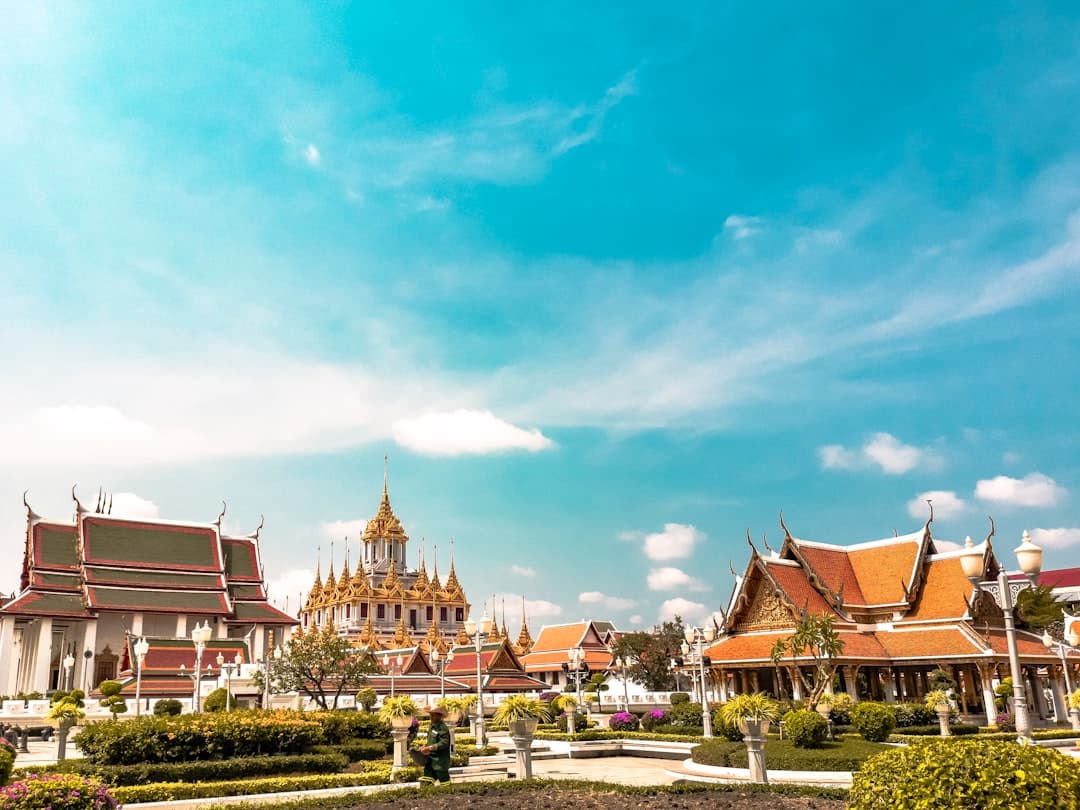
The Grand Palace and Temple of the Emerald Buddha dominate guidebooks because they are genuinely extraordinary—the Emerald Buddha is a small figurine carved from nephrite jade, revered across all of Thailand, housed in a complex of gold and mirrors and marble that demands hours to parse. Entry costs 500 THB; hours are 08:30–16:00 daily. Arrive by 08:45 if you want to move without crushing crowds. Wear pants or a long skirt; shoulders must be covered. A genuine understanding of the space requires a guide—either hire one at the entrance (around 800–1,200 THB for two hours) or book through your hotel. The difference between wandering and understanding is substantial.
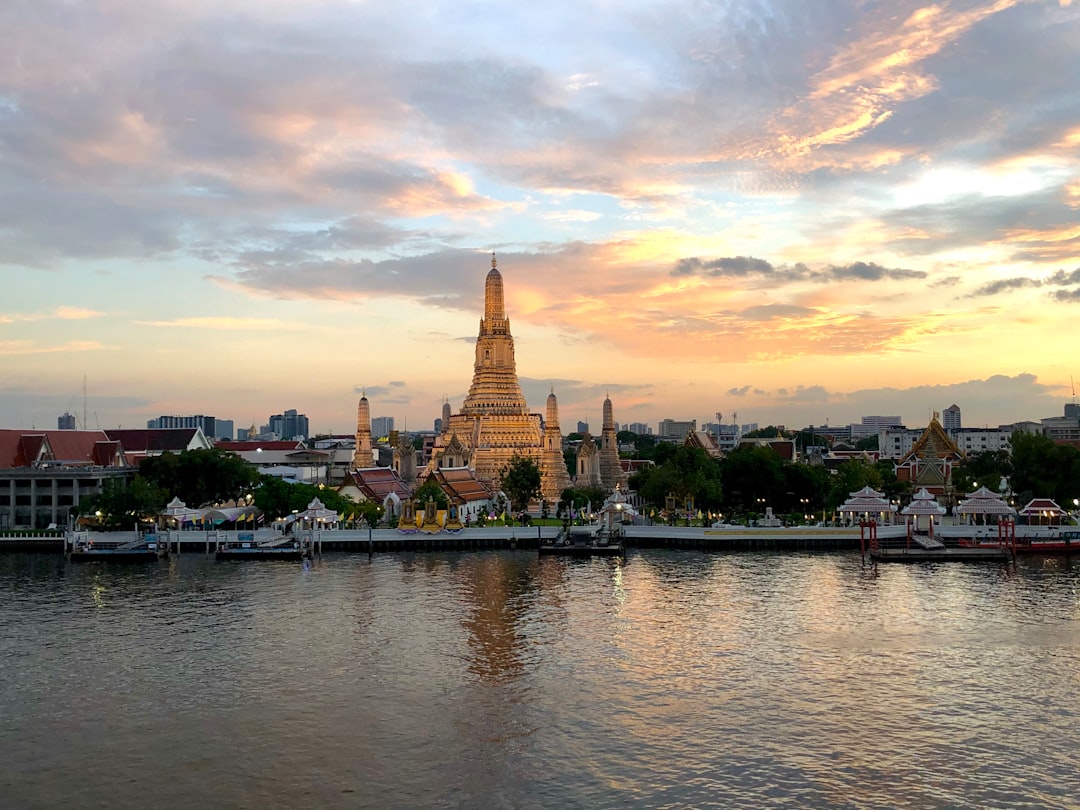
But the Grand Palace teaches you the spectacle of Bangkok; Wat Arun (Temple of Dawn), across the river in Thonburi, teaches you the city's craft. The central prang (spire) is clad in broken porcelain—the remnants of old plates and bowls from China, arranged to catch light and create a surface that shifts as you move. You can climb inside the prang to peer out through small windows. Entry is 100 THB; it opens at 08:00 year-round. The best time to be there is around 15:00 in winter, when the light becomes golden and the river traffic slows.
Wat Suthat Thepwararam, a few kilometers south in the old city, receives far fewer visitors. The central mondop (a squared structure housing a Buddha image) is massive, enclosed, dark, and peaceful. The surrounding grounds are quiet. If you are moving between the Grand Palace and Chinatown, it lies in between and is worth a detour. Entry is free; it is open from around 08:00 to 17:00 daily.
Getting Around: Speed and Patience
The BTS Skytrain and MRT subway are the fastest ways to move. A single trip costs 16–45 THB depending on distance; a Rabbit Card (a reloadable transit card) avoids line queues. The two systems interconnect at a few stations. Trains run from around 05:30 to midnight. Between 07:00 and 09:00 and again from 17:00 to 19:00, both systems are crowded with commuters; avoid these windows unless you need them.
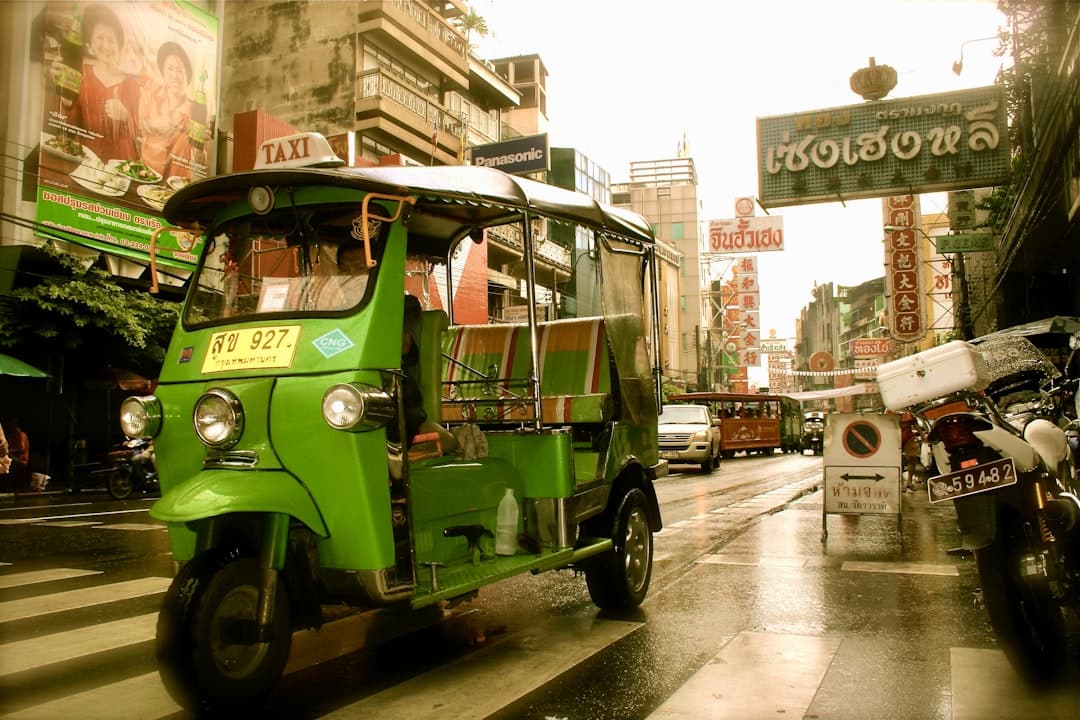
Taxis are metered and cheap—an 8-kilometer trip costs 80–150 THB in light traffic. The meter should start at 35 THB. At night or during rush hours (04:00–09:00 and 17:00–20:00), traffic can make a short distance take an hour. Tuk-tuks (motorized three-wheelers) negotiate fixed prices, often inflated for foreigners; they are useful for short distances and for the sensation, less so for actual travel. Grab (Southeast Asia's ride-hailing app) works smoothly and shows prices before you book. Using Grab from your hotel to any destination within the city costs roughly 60–250 THB depending on distance and time.
Walking—truly walking—is the way to understand a neighborhood. In winter, walking for 2–3 hours through a district is pleasant. Wear sunscreen. Carry water. Understand that Bangkok's sidewalks are not always continuous; sometimes you step into the street, sometimes you duck into a covered walkway. That friction is part of the navigation.
Where to Sleep: Staying Longer in One Place
A night in a mid-range Bangkok hotel runs 1,200–2,500 THB (roughly $35–70 USD). For that price, you get air conditioning, hot water, a safe, and often an included breakfast. Staying in Ari or in residential sois near the BTS makes mornings quieter than staying in Silom or near the Grand Palace. Pullman Bangkok Hotel G is centrally located on the Silom BTS line and runs around 2,000–3,000 THB for a double room; it is a solid midpoint between tourist amenities and walkable neighborhood access. Fusion Suites in Thonburi sits across the river, quieter and older, around 1,500–2,200 THB. Budget hostels in Khao San (the famous backpacker street) cost 300–600 THB a bed, but Khao San is touristed, loud, and not representative of how Bangkok actually functions.
The real advantage of a Cordelie advisor emerges here: booking several nights in one neighborhood, identifying hotels with actual ground-floor relationships to the district (not just transient tourism), and arranging restaurant reservations that require local knowledge or a Thai speaker. Bangkok's best dining experiences—family-run restaurants that do not advertise to foreigners, Michelin-listed sois accessible through connections—require navigation that is subtle and specific to your preferences. An advisor who has been there can match you not just to hotels, but to the actual rhythm and flavor of the neighborhood you choose.
A Cordelie advisor can secure reservations at the harder-to-reach spots in Bangkok's food scene—not the Michelin-starred temples (which are excellent and fully bookable online), but the neighborhood restaurants and market stall relationships that require a Thai phone number, knowledge of how to time your arrival, or introduction through someone local. They can also arrange a knowledgeable guide for the canals and cycling routes, book your long-tail boat in advance to avoid the negotiation, and coordinate your movements across neighborhoods to reduce backtracking. Let a Cordelie advisor craft your Bangkok experience so you spend your time eating and looking, not figuring out logistics.
What a Winter Day Might Actually Look Like
You wake around 06:30 without an alarm—the city is already moving outside. Walk to a nearby soi and buy coffee (20–30 THB) and a pastry or rice soup from a cart. The morning air is cool and clear. By 08:00 you are at Wat Arun, entering before most tourists arrive, climbing the prang and looking out at the river starting its day. By 10:00 you are across the river and walking north along Thonburi's residential streets, no plan, just direction. You find a small restaurant for lunch and eat khao rad gaeng (rice with curry) for around 40 THB. By 13:00 the heat is climbing; you retreat to an air-conditioned BTS train and ride north to Chatuchak or Ari. You walk through a neighborhood you have not been to, find a coffee shop, sit for two hours with a book, watch the afternoon. Around 17:00 you move to a market—Yaowarat, Or-Tor-Kor, or a smaller neighborhood market—and eat dinner standing or sitting at a plastic stool. By 19:30 you are back at your hotel. You have moved maybe 15 kilometers total, felt like you have traveled much further, and spent perhaps 300–500 THB on the entire day.
That is how Bangkok works when you let it.
Beyond Bangkok: When Three Days Becomes Five, or a Gateway to Thailand
If you find yourself settling into Bangkok's rhythm, consider adding time in nearby destinations that shift the texture without requiring long travel. Ayutthaya, Thailand's ancient capital, sits 80 kilometers north and is reachable by train in 1.5–2 hours from the central station (40–50 THB for a local train; higher if you upgrade to express). It is a day-trip destination but worth staying overnight to see the temples in early light. Closer, the floating markets of Amphawa (30 kilometers west) operate Friday through Sunday evenings and are reachable by van or organized tour in 1.5 hours from central Bangkok. These trips extend your understanding of Thai pace and settlement patterns without requiring you to abandon the country—or find your way back to organize your next move. A Cordelie advisor can stitch Bangkok, Ayutthaya, and a stay in Chiang Mai's old city into a single journey, timing your movements so each destination builds on the previous one rather than feeling like a checkbox.
The cool season (November–February) brings dry weather and crowds. Prices for hotels peak in late December through early January; consider visiting in late November or early February to avoid the peak and find more booking flexibility. Air quality is generally good in winter; it deteriorates from March through May. Bangkok is cash-friendly, though cards work at hotels, restaurants, and many shops. ATMs are everywhere; withdraw cash in amounts around 2,000–5,000 THB to avoid excess fees. Tipping is not expected but is appreciated, especially for guides and service staff; round up your bill or leave 20–50 THB. The city shuts down very little; something is open and serving food at nearly any hour.
Go with someone who knows
The right suite, the right season, the reservations that never appear online — your Cordelie advisor knows them, and holds them for you.
Plan with a Cordelie advisor
Alex Moreau writes about going slowly. Nine years of reporting from trains, river boats and towns nobody has a hashtag for, mostly across Europe and North Africa. They live in Lisbon, keep a running list of the continent's best two-hour lunches, and believe most itineraries would improve if you deleted a city.
Related Articles
 trip report
My Winter in Bangkok: A Travel Story
A first-person, day-by-day account of four unhurried December days in Bangkok — cooler evenings, riverside boats, temple mornings, and a Chinatown food crawl, told with real prices and timings.
 travel tips
15 Essential Packing Tips for Southeast Asia
Master Bangkok's unique packing challenges with 15 essential tips that cover tropical weather, temple dress codes, and urban exploration needs.
 best of list
Bangkok Street Food: 15 Dishes You Must Try
From fiery som tum to silky boat noodles, Bangkok's street food scene is the best in the world. Here are the essential dishes and where to find them.